
Affiliate Disclosure: This post contains affiliate links. If you book through our links, we earn a small commission at no extra cost to you.
Montenegro is a small Adriatic country in the western Balkans, with a coastline of 293km, two UNESCO World Heritage sites, and a land area smaller than Connecticut. In 2026, dinner in Kotor's Old Town costs €18 for two, a room with a sea view in Perast runs €90, and a boat to the island church of Our Lady of the Rocks is €5. It is still priced like the secret it was 15 years ago -- and that won't last.
The country is smaller than Connecticut. It has one of the most photographed bays in the world, two UNESCO World Heritage sites, Adriatic beaches, and mountains that hold snow until May. Most of it fits within a 2-hour drive from the airport.
This guide covers every region, with real prices and the things that actually matter.
The Story of Montenegro
The name means "Black Mountain" in Venetian Italian -- the dark granite peaks of Mount Lovćen rising above the coast. The Ottomans conquered almost everything in the Balkans between the 14th and 17th centuries. They never fully conquered this.
The mountain tribes of the interior fought back for generations. Each time Ottoman forces pushed in, the terrain and the resistance pushed them out. The Venetians held the Bay of Kotor for nearly 400 years, using it as a trading port while the rest of the region changed hands repeatedly around them.
When the French briefly took the bay in 1807, Napoleon reportedly wrote to his foreign minister: "Take great care of the Bay of Kotor. It is the most beautiful encounter between sea and land in the world." He held it for seven years before losing it to Austria. Now you can walk its medieval streets for nothing.
That stubbornness is still in the stone. The mountains that kept Montenegro isolated for centuries are now its main attraction.
Quick Facts
| Daily budget | €40--60 (budget) · €80--120 (mid) · €150--250+ (comfort) |
| Best time to visit | May--June · September |
| Currency | Euro (EUR) -- uses euro despite not being EU member |
| Language | Montenegrin/Serbian · English in tourist areas |
| Visa | None for EU, US, UK, AU, CA (up to 90 days) |
| Airports | Tivat (TIV) · Podgorica (TGD) |
| Size | 620,000 people · smaller than Connecticut |
| Tap water | Safe to drink throughout the country |
Regions of Montenegro
The Bay of Kotor is why most people come. Kotor, Perast, and Herceg Novi sit along the bay's northern and western shores. Medieval walled cities, Baroque palaces, island churches. This region has the highest concentration of things worth seeing in the country.
The Budva Riviera is 30km south of Kotor and has the best beaches. Budva itself is the busiest resort town -- good for nightlife, crowded in summer. Sveti Stefan is the iconic island hotel visible from the coastal road. The beaches at Jaz and Becici are excellent.
Durmitor and the north is the other side of Montenegro. Mountains, glacial lakes, and the Tara Canyon -- the deepest gorge in Europe at 1,300m. Žabljak is the base town. This is serious outdoor territory: rafting, hiking, skiing in winter.
Central Montenegro has Podgorica (functional capital, worth a half-day at most) and Cetinje, the former royal capital with punches above its weight for museums and history.
Things to Do
Kotor Old Town is the best-preserved walled medieval city on the Adriatic outside Dubrovnik. The walls themselves can be climbed -- 1,355 steps to the fortress above, €8 entrance, two hours return. The view from the top is worth every step. Go early morning before the cruise ship crowd arrives.
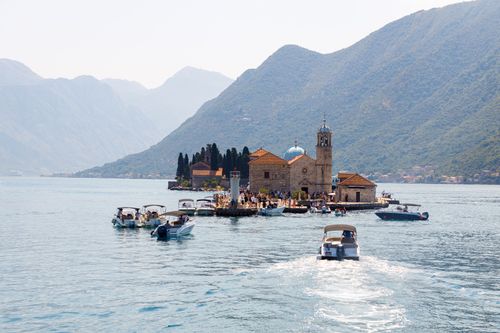
Our Lady of the Rocks in Perast is an artificial island built over centuries by sailors throwing rocks into the bay. The church on top holds 68 ex-voto paintings by men who survived storms at sea. Book the Perast islands boat tour from Kotor or Perast directly.
Sveti Stefan is the photogenic island-hotel you've seen in every Montenegro photo. The island itself is closed to non-guests (it's an Aman resort). The beach below and the view from the road are free. The neighbouring Milocer beach is one of the best in the country.
Durmitor National Park offers the most dramatic scenery in Montenegro. Black Lake (Crno jezero) is a 2km walk from Žabljak and is genuinely beautiful. The park has over 30 glacial lakes. Book a Durmitor day trip from Kotor if you prefer not to drive the mountain roads yourself.
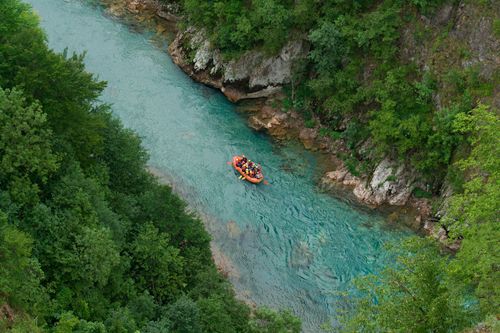
Tara Canyon Rafting is the signature adventure activity. The canyon is the second deepest in the world after the Grand Canyon. Rafting trips run April to October. A full day costs €45--65 depending on the operator.
Herceg Novi at the bay entrance is the most underrated town in Montenegro. The botanical garden, the old town above the marina, the fortress overlooking the water. Far fewer tourists than Kotor and a far more relaxed pace. Full Herceg Novi guide here.
Tours & Activities
Top Things to Do in Montenegro

Affiliate links via GetYourGuide — we earn a small commission at no extra cost to you.
Book Online
All Activities in Montenegro
Affiliate links via GetYourGuide — we earn a small commission at no extra cost to you.
Where to Eat
Njeguški pršut is the smoked ham from the village of Njeguši, high on Mount Lovćen. Every proper meal in the Bay of Kotor starts with it, served with local cheese and olives. This is not the prosciutto from Italian supermarkets.
Kačamak is polenta with sour cream and cottage cheese -- peasant food in the best sense. Hearty, cheap, and only found in konobas outside tourist areas.
Fresh fish on the coast is consistently good. Sea bream (orada) and sea bass (brancin) are the local standards. €12--16 for a whole fish in most restaurants.
Budget (€8--12 for two): Konobas with no English menu in the back streets of Kotor or Herceg Novi.
Mid-range (€20--35 for two): Most restaurants in the old towns. Quality varies significantly -- check Google reviews before sitting down.
Tourist trap warning: Waterfront restaurants inside Kotor's Old Town charge significantly more than identical food 100m away. Cross the main gate, walk left, and find the same menu for 30--40% less.
Where to Stay
Budget (€35--60/night): Hostels in Kotor Old Town or Budva. Guesthouses in Herceg Novi offer the best value in this bracket. Look for "soba" signs when you arrive -- family rooms not listed on Booking.com are often half the price.
Mid-range (€80--150/night): Boutique hotels in Perast or Herceg Novi offer the best ratio of quality to price. Stone-walled rooms, bay views, breakfast included. Search hotels in Montenegro on Booking.com.
Luxury (€200+/night): The Bay of Kotor has several genuine boutique properties in restored palaces. Sveti Stefan's Aman resort is in a category by itself at €1,000+. More accessible luxury: Conte Hotel in Perast, One&Only Portonovi near Herceg Novi.
Looking for an apartment or villa? Browse Montenegro vacation rentals on Vrbo -- particularly good for families or longer stays along the bay.
Already have Hotels.com rewards? Search hotels in Montenegro on Hotels.com.
Getting There
By Plane
Montenegro has two international airports:
Tivat Airport (TIV) is 20km from Kotor and the best option for bay visitors. easyJet, British Airways, Ryanair, and Wizz Air all fly here seasonally. Return flights from London start around €80 in shoulder season.
Podgorica Airport (TGD) has more year-round flights and is better for Durmitor and central Montenegro. Transfer to Kotor takes about 90 minutes.
By Land
Buses connect Montenegro to Dubrovnik (90 minutes from Herceg Novi), Sarajevo (5 hours from Kotor), and Belgrade (8 hours). The Dubrovnik to Kotor route is a practical option if you're combining both destinations.
A car ferry crosses the Bay of Kotor from Kamenari to Lepetane every 10--15 minutes (€5 per car), saving an hour of driving around the bay.
Getting Around
A rental car makes Montenegro significantly easier, especially for Durmitor and the beach towns south of Kotor. Search Montenegro car rental deals -- prices start from €25/day in shoulder season.
Within the Bay of Kotor, local buses connect the main towns every 30--60 minutes (€1--3 per trip). The Kotor to Budva road is 30km but can take 45 minutes in peak summer -- plan accordingly.
Day Trips
Perast is 12km from Kotor and 20 minutes by bus. Go for the island churches and stay for the waterfront. One of the most photogenic small towns in the Mediterranean. Full Perast guide here.
Dubrovnik is 90 minutes from Herceg Novi and 2.5 hours from Kotor. Worth a day trip, particularly for the city walls. You need to cross into Croatia so carry your passport.
Cetinje is 30 minutes from Kotor by car. The old royal capital has excellent museums (the King Nikola Palace, the National Museum) and far fewer visitors than the coastal towns.
Budget Breakdown
| Budget | Mid-range | Comfort | |
|---|---|---|---|
| Accommodation/night | €35--60 | €80--150 | €200--400 |
| Food/day | €12--20 | €25--40 | €50--80 |
| Transport/day | €3--10 | €15--30 | €30--60 |
| Activities/day | €5--15 | €20--40 | €50--100 |
| Total/day | €40--60 | €80--120 | €150--250 |
7 days in Montenegro: Budget -- €300--450. Mid-range -- €600--850. Comfort -- €1,100--1,800.
Practical Tips
Travel insurance: Montenegro requires proof of medical insurance at land borders.

World Nomads
Travel insurance for independent travelers from 100+ countries. Covers medical emergencies, trip cancellation, lost luggage, and adventure activities. Check the policy wording for full coverage details.
Get a Quote →We receive a fee when you get a quote from World Nomads using this link. We do not represent World Nomads. This is not a recommendation to buy travel insurance.
eSIM: Mobile coverage is good along the coast and in the mountains. Get an Airalo eSIM before you fly -- the Balkans plan covers Montenegro.
Currency: Montenegro uses the euro despite not being an EU member. ATMs are everywhere in tourist areas. Card payment is accepted in most restaurants and shops.
Driving: Mountain roads are narrow and the driving culture is confident. Take your time. The road over Lovćen to Cetinje has 25 switchbacks and minimal guardrail in places. Worth it for the view.
Crowds: July and August are peak season. Kotor's Old Town gets genuinely crowded when cruise ships dock -- arrive before 9am or after 5pm. Perast and Herceg Novi are noticeably quieter.
Best Time to Visit
May and June are the best months. The sea is warm (18--22°C), crowds are manageable, and prices are 20--30% below peak.
July and August: Peak season. The bay and beaches are packed. Kotor feels crowded from 10am to 4pm. Still worth coming, but book accommodation 2--3 months ahead.
September: The best single month. Water temperature peaks. Crowds thin significantly after August 20. Prices drop. The mountains start turning colour.
October to April: Off-season on the coast. Durmitor gets good snow from December for skiing. The bay towns are quiet and atmospheric. Most beach facilities close.
FAQ
Is Montenegro safe to visit? Yes. Montenegro has a very low violent crime rate. Petty theft in busy tourist areas is possible but uncommon. The bay towns, beaches, and mountain areas are all safe for solo travellers and families.
What currency does Montenegro use? The euro, despite not being an EU member. Montenegro adopted the euro in 2002. ATMs are widely available in tourist areas.
How many days do I need in Montenegro? Five to seven days covers the Bay of Kotor and Budva Riviera well. Add 2--3 days for Durmitor. Ten days lets you see most of the country without rushing.
Is Kotor worth visiting? Yes. Kotor is one of the best-preserved medieval walled cities on the Adriatic. The combination of the old town, the bay, and the walls above it is genuinely impressive and unlike anywhere else in the region.
What is the best area to stay in Montenegro? For first-time visitors, the Bay of Kotor gives the best combination of sightseeing, food, and access to the rest of the country. Budva is better if beaches and nightlife are the priority.
Is Montenegro more expensive than Albania? Yes, but not dramatically. A similar standard of accommodation costs about 30--40% more than in Albania, and food is 20--30% more. Still reasonable by Western European standards.
Conclusion
Montenegro packs an unreasonable amount into a small space. The bay, the mountains, the medieval towns, the beaches. Very few countries this size offer this range.
Book before the summer rush. Search flights to Montenegro on KAYAK and check hotel availability early -- the bay towns sell out months ahead in peak season.

Hotels in Montenegro
Compare hotels, apartments and guesthouses in Montenegro. Real guest reviews, free cancellation on most bookings.
Search Hotels in Montenegro →Affiliate link — we earn a commission at no extra cost to you.
World Nomads
Travel insurance for independent travelers from 100+ countries. Covers medical emergencies, trip cancellation, lost luggage, and adventure activities. Check the policy wording for full coverage details.
Get a Quote →We receive a fee when you get a quote from World Nomads using this link. We do not represent World Nomads. This is not a recommendation to buy travel insurance.
Skip Roaming Fees in Montenegro
Airalo eSIMs work in 190+ countries. Buy before you fly, activate on arrival. No physical SIM needed. Just scan a QR code.
Get an eSIM →Affiliate link — we earn 10% commission at no extra cost to you.

