
This post contains affiliate links. If you book through my links, I may earn a small commission at no extra cost to you. Read my full disclosure.
The bullet holes made me stop
I was walking down a busy street in central Sarajevo, looking for a place to eat cevapi, when a patch of pavement caught my eye. The asphalt was darker than the rest. A different color. A different texture.
"Sarajevo Rose," a man behind me said. He saw me staring.
I looked closer. The dark patch was a mortar crater — one of thousands that fell on the city during the 1,425-day siege of Sarajevo. The crater had been filled with red resin. A memorial. A scar. Right there on the sidewalk, next to a tram stop, a bakery, and a man selling cigarettes.
That's Sarajevo. History isn't in museums here. It's in the pavement. In the bullet holes that still riddle every other building. In the old man who will show you his war wound if you buy him a coffee.
But here's the thing that got me: 50 meters from that Sarajevo Rose, kids were playing soccer. Women were shopping for vegetables. A group of teenagers were taking selfies. Life, right on top of death. Refusing to be defeated.
I spent five days in Sarajevo. I came for the history — the place where World War I started, the longest siege of a capital city in modern warfare. I stayed for the food, the coffee culture, the mountains that surround the city, and the people who have seen hell and still offer you rakija with a smile.
This is not a cute European capital. It's not Prague or Vienna or Budapest. It's messier, poorer, and infinitely more real. And it will change the way you think about what a city can survive.
Why Sarajevo is the most underrated capital in Europe
1. The food is incredible. Ottoman Ćevapi, Austro-Hungarian schnitzel, Bosnian coffee that stains the cup, and burek that will ruin all other burek for you forever. You can eat like a king for €10.
2. The history is overwhelming. The assassination of Archduke Franz Ferdinand (1914). The 1984 Winter Olympics. The siege of Sarajevo (1992-1996) — the longest siege of a capital city in the history of modern warfare. All of it happened here, and all of it is still visible.
3. The mountains are right there. Trebević mountain overlooks the city. A 15-minute cable car ride takes you from the old town to 1,627 meters. Hiking, the abandoned bobsled track, and views that stretch for miles. Olympic peaks Jahorina and Bjelašnica are 30–40 minutes by car.
4. It's still affordable. A massive plate of cevapi with bread and onions: 5-7 KM (€2.50-3.50). A beer in a bar: 2-3 KM (€1-1.50). A nice hotel room in the old town: 60-80 KM (€30-40). You can live like a local for €40 a day.
5. The coffee culture is serious. Bosnian coffee is not Turkish coffee (don't say that to a Bosnian). It's served in a copper pot (džezva) with a cube of sugar and a piece of lokum (Turkish delight). Drinking it is a ritual that takes 30 minutes minimum. Rushing is not allowed.
The Story of Sarajevo
On February 8, 1984, the world came to Sarajevo.
The XIV Winter Olympic Games opened in this small Yugoslav valley. Forty-nine nations sent their best athletes to compete. The bobsleigh track on Trebević mountain was state of the art. The Olympic flame burned. The whole world watched — and liked what it saw. A modern, multicultural city at the crossroads of East and West. A city that worked.
Eight years later, those same mountains were covered with artillery.
From April 5, 1992 to February 29, 1996, Sarajevo was surrounded by forces positioned on the peaks it had just shared with the world. For 1,425 days — longer than the siege of Leningrad in World War II — the city endured daily shelling. The bobsleigh track became a sniper position. The Olympic Village became a barracks. A stretch of main road became "Sniper Alley." People sprinted across it.
Inside the city, 350,000 people survived on a tunnel dug by hand under the airport runway. They called it the Tunnel of Hope. Eight hundred meters long. One point six meters high. Barely wide enough to walk stooped. People dragged carts of food through it in the dark. Weapons came in. Children were smuggled out. The city held.
The tunnel still exists. You can walk through 25 meters of it. You will feel the dimensions of what survival looks like.
What makes Sarajevo extraordinary is not the tragedy — it's what came after. The city rebuilt. The cable car reopened in 2018. Families now picnic on the same mountain that once held them hostage. Locals drink coffee in streets where snipers once fired.
This is the city you are visiting. And once it gets into you, it never leaves.
Understanding Sarajevo
The geography
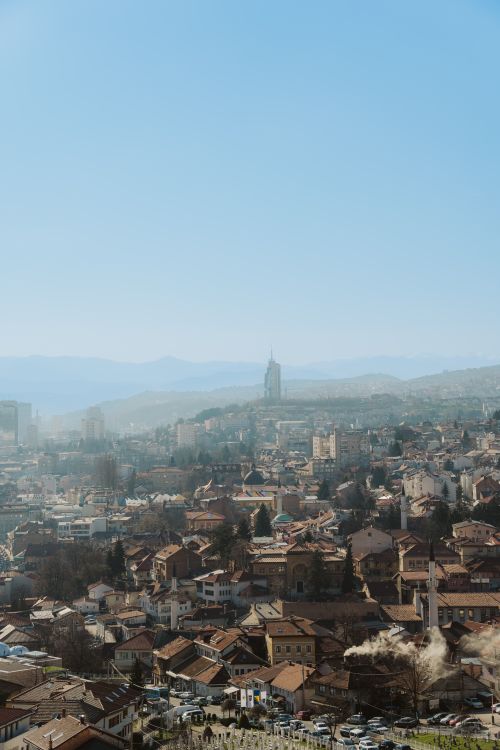
Sarajevo sits in a valley, surrounded by mountains: Trebević (1,627m), Igman (1,502m), Bjelašnica (2,067m), and Jahorina (1,916m). The Miljacka river runs through the center.
The city is divided into districts, but for tourists, the main areas are:
- Baščaršija — The Ottoman old town. Cobblestone streets, copper workshops, mosques, and the heart of tourist Sarajevo.
- Ferhadija — The Austro-Hungarian center. Wider streets, European-style buildings, Catholic and Orthodox churches.
- Marindvor — The modern center. Government buildings, the Eternal Flame, shopping.
- Grbavica — Across the river. Heavily damaged during the siege. Now rebuilt. The Holiday Inn (famous as a war correspondents' hotel during the siege) is here.
The two Sarajevos
Sarajevo is often described as "where East meets West." That's not marketing. In the Ottoman old town, you hear the call to prayer from minarets. In the Austro-Hungarian center, you hear church bells.
The dividing line is the river, roughly. East of the river: Ottoman. West of the river: Austro-Hungarian. Walk from the Sebilj fountain (Ottoman) to the Eternal Flame (Austro-Hungarian). It takes 15 minutes. You'll pass through 400 years of history.
The war (1992-1996)
You can't understand Sarajevo without understanding the siege. From April 1992 to February 1996, Bosnian Serb forces surrounded the city. 1,425 days. The longest siege of a capital city in the history of modern warfare — longer than Leningrad in World War II.
The statistics are staggering:
- 13,952 people killed (including 1,601 children)
- 10,000+ wounded
- 50,000+ apartments damaged or destroyed
- 100+ mortars fell on the city per day at the peak
The city survived on a tunnel under the airport (the Tunnel of Hope), built by hand. Supplies, weapons, and people passed through it. It was the only connection to the outside world.
When you walk through Sarajevo today, look at the buildings. The bullet holes are everywhere. The "Sarajevo Roses" — mortar craters filled with red resin — are scattered across the city. They're not hidden. They're right there, on sidewalks, in front of cafes, next to playgrounds.
The siege ended. The city rebuilt. The scars remain.
Getting to Sarajevo
By air
Sarajevo International Airport (SJJ) is 6 kilometers from the city center. Flights from most major European cities: Vienna, Munich, Istanbul, Zagreb, Belgrade, Ljubljana, Dubai.
From the airport to the city:
- Taxi: 15-20 KM (€7.50-10). 15 minutes. Official taxis only (look for the license). Airport taxis are regulated — price should be posted.
- Bus: 5 KM (€2.50). Every 30 minutes. Drops you at the main bus station (near the center).
- Tram: The new tram line connects the airport to the city. 2 KM (€1). Slow but cheap.
Search flights to Sarajevo on Travelpayouts →
By bus
Buses connect Sarajevo to most Balkan cities:
| From | Duration | Cost |
|---|---|---|
| Mostar | 2 hours | 10-12 KM (€5-6) |
| Banja Luka | 3 hours | 15-20 KM (€7.50-10) |
| Belgrade | 6 hours | 25-30 KM (€12.50-15) |
| Dubrovnik | 5 hours | 30-35 KM (€15-17.50) |
| Zagreb | 8 hours | 40-45 KM (€20-22.50) |
The main bus station is near the city center, close to the train station.
Search bus routes to Sarajevo on 12Go →
By train
The train from Sarajevo to Mostar is one of Europe's great rail journeys — winding through the Neretva canyon. 2.5 hours, 13-15 KM (€6.50-7.50). Few trains per day — check the schedule.
Trains to other cities are slower and less frequent than buses.
By car
Roads are good. From Mostar: M17 north (2 hours). From Dubrovnik: M6 to Mostar then M17 (4 hours). From Belgrade: E70 west then M5 (5 hours).
Parking in Sarajevo is difficult and expensive. Leave the car at your hotel and walk or take trams.
Search rental cars in Sarajevo on DiscoverCars →
Where to stay in Sarajevo
Choose based on your priorities:
- Baščaršija (old town): Most atmospheric. Cobblestone streets, close to everything. Noisy at night.
- Ferhadija (Austro-Hungarian center): Central, quieter, more European. Good for first-timers.
- Marindvor (modern center): Less touristy, more local. Closer to the Eternal Flame and government buildings.
- Grbavica (across the river): Cheaper, authentic, near the Holiday Inn and Tunnel Museum.
Hotels & Accommodation
Where to Stay in Sarajevo
Compare hotels, apartments, and guesthouses. Prices update in real time.
We earn a small commission when you book through these links — at no extra cost to you.
Budget (€20-35/night)
Hostel Kucha — Best hostel in Sarajevo. Baščaršija location. Clean, social, friendly. Dorms €12-15, private rooms €30-35. Free walking tours. The owner is a legend.
Pansion Stari Grad — Guesthouse in the old town. Basic but spotless. Single rooms €20-25. Shared bathroom. No breakfast.
Hostel Balkan — Smaller and quieter than Kucha. Same area. €10-12 for dorms.
Mid-range (€40-70/night)
Hotel Saat — In Baščaršija, right next to the clock tower. Modern rooms in a historic building. €50-65. The rooftop terrace has views of the old town.
Hotel City Boutique — In Ferhadija. Stylish, comfortable, excellent breakfast. €60-75. Close to everything but quieter than the old town.
Hotel VIP — On the river, between the old and new towns. Modern, slightly corporate but good value. €50-65.
Luxury (€80-130/night)
Hotel Europe — The grand hotel of Sarajevo. Austro-Hungarian building on the main pedestrian street. €90-120. Old-world charm, excellent service.
Swissotel Sarajevo — The tallest building in Bosnia. Modern luxury, pool, spa, incredible views. €100-130. Outside the center (10-minute tram ride).
Hotel President — Overlooks the Eternal Flame. Elegant rooms, spa, good restaurant. €85-110.
Things to do in Sarajevo
1. Walk Baščaršija — Sarajevo's Ottoman heart
Start at the Sebilj fountain — the wooden Ottoman-style fountain in the center of the square. It's the symbol of Sarajevo. Pigeons everywhere. Tourists everywhere. Embrace it.
From the fountain, wander into the narrow cobblestone streets (they're called sokaci). The old town is a maze of copper workshops, souvenir shops, cafes, and bakeries.
Don't miss:
- Kazandžiluk street — The copper street. Watch craftsmen hammering copper pots and coffee sets. The sound is the soundtrack of Baščaršija.
- Gazi Husrev-beg Mosque — The largest mosque in Bosnia (1531). Visit between prayers. Remove your shoes. Women: cover your head (scarves provided).
- Old Jewish Cemetery — One of the largest Jewish cemeteries in Europe. On the hill above the old town. Haunting and beautiful.
2. Drink Bosnian coffee — the right way
Find a cafe in Baščaršija (I like Čajdžinica Džirlo — hidden, authentic). Order bosanska kafa.
It comes on a tray: a copper pot (džezva) with thick, unfiltered coffee, a small cup (fildžan), a cube of sugar, a piece of lokum (Turkish delight), and a glass of water.
The ritual:
- Dip the sugar cube in the coffee. Take a bite.
- Sip the coffee slowly. Let the grounds settle.
- Drink the water between sips to cleanse your palate.
- Turn the empty cup over on the saucer. The grounds form patterns. Someone who knows what they're doing can "read" your fortune.
Cost: 2-3 KM (€1-1.50). Time: minimum 30 minutes. Rushing is not allowed.
3. Eat cevapi where the locals eat
Ćevapi are grilled minced meat sausages, served with somun (flatbread), raw onion, and kajmak (creamy dairy spread). It's the national dish of Bosnia.
The best cevapi in Sarajevo:
- Ćevabdžinica Željo — The most famous. Multiple locations. The original is near the Sebilj. There will be a line. Join it. 6 cevapi, bread, onion, kajmak: 5 KM (€2.50).
- Ćevabdžinica Petica Ferhatović — Local favorite. Less touristy. 6 KM (€3) but bigger portion.
- Ćevabdžinica Hodžić — Near the cathedral. Excellent quality. 5 KM (€2.50).
The rule: The best cevapi places have no menu, no decoration, and the walls are stained from decades of smoke. If it looks fancy, find somewhere else.
4. Visit the Tunnel of Hope (Tunel spasa)
This is the most important war museum in Sarajevo. During the siege, the city was surrounded. The only connection to the outside world was an 800-meter tunnel dug under the airport runway. Built by hand, in secret, in 4 months.
The tunnel was 1.6 meters high and 1 meter wide. People crawled through it to bring food, medicine, weapons, and to escape the city.
Today, a 25-meter section of the tunnel is preserved as a museum. You can walk through it. You'll feel the claustrophobia. You'll see the wooden supports, the rails for pulling supply carts, the photos of people crawling through mud.
Location: In the suburb of Dobrinja (near the airport). 20 minutes from the center by taxi.
Entry: 10 KM (€5). Guided tours available.
Getting there: Taxi (10-15 KM / €5-7.50) or bus 31 from the center.
Pro tip: Go early (9am) to avoid crowds. The tunnel is narrow — you'll be shuffling behind other visitors.
5. Ride the cable car up Trebević mountain
The Sarajevo Cable Car (Žičara) reopened in 2018, rebuilt after being destroyed in the war. It takes 15 minutes to ascend from the old town to the top of Trebević mountain (1,627 meters).
The views: Spectacular. The entire city, the surrounding mountains, and on clear days, as far as the border with Montenegro.
Cost: 20 KM (€10) round trip. 15 KM (€7.50) one way.
At the top:
- Abandoned bobsled and luge track from the 1984 Winter Olympics. Covered in graffiti. Eerie and photogenic.
- Hiking trails of all difficulties.
- Restaurants (overpriced — bring a picnic).
Pro tip: Take the cable car up, hike down. The trail from the summit to the city takes 1.5-2 hours. Well-marked. Beautiful forest.
6. See the assassination site of Archduke Franz Ferdinand
On June 28, 1914, Archduke Franz Ferdinand of Austria and his wife Sophie were shot by Gavrilo Princip at the corner of what is now called Franz Ferdinand Street and Zelenih Beretki Street.
The assassination triggered World War I. 16 million people died.
The site is marked with a small plaque and a museum.
Museum of Sarajevo 1878-1918 — Located in the building where the assassination took place. Small but well-curated. Exhibits on the assassination and the Austro-Hungarian period.
Entry: 5 KM (€2.50).
The irony: The museum is on the street named after Franz Ferdinand. The plaque is small and easy to miss. Many tourists walk right past it. Don't.
7. Walk the Sarajevo Roses
The Sarajevo Roses are mortar craters filled with red resin — memorials to the civilians who were killed by shelling during the siege. There are 200+ of them across the city.
The most prominent is on the sidewalk in front of the Markale Market (just off Ferhadija). On February 5, 1994, a mortar shell hit the market, killing 68 people and wounding 144. The NATO ultimatum that followed led to the withdrawal of heavy weapons from around Sarajevo.
The rose is right there, next to the vegetable stalls. People buy tomatoes and walk over it. That's the point.
Other roses: Outside the cathedral, in front of the Holiday Inn, near the National Library.
8. Visit the War Childhood Museum
This is not a museum about military strategy or political leaders. It's a museum about children who grew up during the siege. Personal objects donated by people who were children in Sarajevo between 1992-1996.
Exhibits include:
- A stuffed bear with a bullet hole
- A "milk can" (used to fetch water from the river — the water supply was cut off during the siege)
- A handmade doll
- Drawings of tanks and bombs made by 5-year-olds
The museum is small, quiet, and devastating. You will cry. Go anyway.
Entry: 7 KM (€3.50).
Location: Logavina street, in a residential neighborhood 10 minutes from the center.
9. See the Eternal Flame (Vječna vatra)
A memorial to the civilians and soldiers who died in World War II. The flame has been burning continuously since April 6, 1946. It's on Ferhadija, at the intersection with the main pedestrian street.
The flame flickers. It looks fragile. That's the point.
10. Explore the abandoned bobsled track
On Trebević mountain. Built for the 1984 Winter Olympics. Used as an artillery position during the siege. Now abandoned, covered in graffiti, slowly being reclaimed by the forest.
You can walk the entire 1.5-kilometer track. The concrete is cracked. Trees grow through it. The graffiti ranges from political to stupid to beautiful.
Getting there: Cable car to the top of Trebević, then a 20-minute walk downhill to the track. Or hike up from the city (1.5-2 hours).
Pro tip: Go late afternoon. The light through the trees is incredible. Bring a flashlight for the tunnel section (it's pitch black).
11. Visit the National Library (Vijećnica)
The most beautiful building in Sarajevo. Built in 1896 in a pseudo-Moorish style (the Austro-Hungarians loved this aesthetic). It served as the city hall, then the National Library.
On August 25, 1992, the library was shelled and burned. 2 million books were destroyed. The building sat as a ruin for 20 years.
It was rebuilt and reopened in 2014. Today, it's a symbol of the city's survival.
Entry: 10 KM (€5). Guided tours available.
Pro tip: The stained glass windows are stunning. Look up.
12. Eat burek at Buregdžinica Bosna
Burek is phyllo pastry filled with meat (beef or lamb). There's also sirnica (cheese), zeljanica (spinach), and krompiruša (potato). But burek is only meat. If you order "burek with cheese" in Sarajevo, people will correct you.
Buregdžinica Bosna — The most famous burek shop in the city. On a corner in Baščaršija. The line goes down the street. Join it. Order burek (meat). Eat it standing up. Drizzle with yogurt (kiselo mlijeko).
Cost: 3-4 KM (€1.50-2) for a portion.
Pro tip: Go for breakfast (7-9am) when the burek is freshest.
13. Take a free walking tour
Several companies offer free (tip-based) walking tours. They're excellent. The guides were children or teenagers during the siege. Their personal stories are unforgettable.
Recommended: Sarajevo Free Walking Tour (meets at the Sebilj fountain daily at 10:30am and 2pm). Tour covers Ottoman, Austro-Hungarian, and war history.
Length: 2-2.5 hours. Tip: 10-20 KM (€5-10) per person.
14. Visit the Olympic Museum
Small museum dedicated to the 1984 Winter Olympics. Exhibits: torches, medals, uniforms, photos. Also covers the destruction of Olympic sites during the siege.
Entry: 5 KM (€2.50).
Location: Next to the Holiday Inn.
Pro tip: Combine with a walk past the Holiday Inn (the "Holiday Inn sniper" building — war correspondents stayed here during the siege). The bullet holes are still visible.
Tours & Activities
Top Things to Do in Sarajevo



Affiliate links via GetYourGuide — we earn a small commission at no extra cost to you.
Book Online
All Activities in Sarajevo
Affiliate links via GetYourGuide — we earn a small commission at no extra cost to you.
Tours from Sarajevo:
Book: Sarajevo war tour with Tunnel Museum →
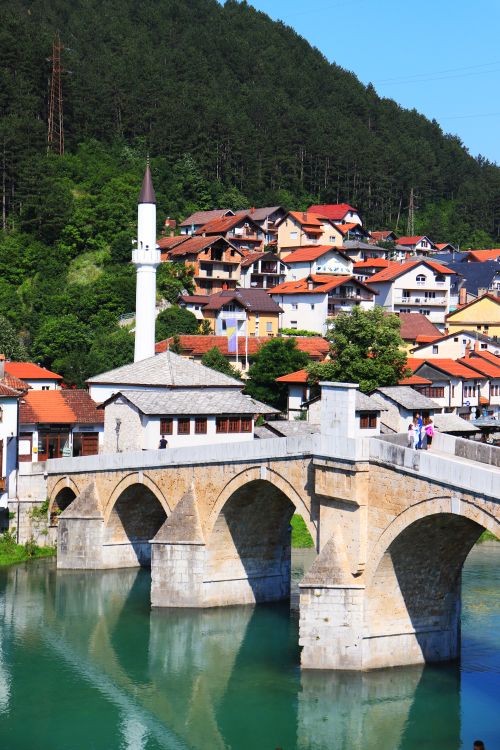
Book: Mostar and Konjic day trip from Sarajevo →
Book: Olympic mountains tour (bobsled track + cable car) →
Where to eat in Sarajevo (beyond cevapi)
Ćevabdžinica Željo (cevapi)
Already covered. The best. Multiple locations.
Buregdžinica Bosna (burek)
Already covered. The best.
Dveri
One of the best restaurants in Sarajevo. Traditional Bosnian food, elevated. Small, intimate, candles on the tables. In the old town.
Try: Veal soup (teleća čorba), lamb under the bell (janjetina ispod sača), peka (slow-cooked meat and vegetables). Homemade bread.
Cost: €15-25 for a full meal.
Reservations: Required for dinner (small space).
Karuzo
Modern Bosnian-Italian fusion. On the main square in Ferhadija. Good for lunch or a nice dinner.
Try: Pasta with truffles (Bosnia has truffles), grilled fish, local wines.
Cost: €12-20.
Nanina Kuhinja (Grandma's Kitchen)
Family-run. The grandmother cooks. The grandson serves. The menu changes daily based on what's fresh. In the old town.
Try: Whatever she made that day.
Cost: €8-12.
Pro tip: No menu. Ask what's available.
Klopa
Casual, modern, affordable. Good for a break from traditional Bosnian food. Burgers, salads, pasta, local craft beer.
Cost: €6-10.
Čajdžinica Džirlo (coffee and tea)
The best Bosnian coffee in Sarajevo. Hidden courtyard in Baščaršija. Look for the small sign.
Try: Bosnian coffee (obviously), homemade juices, baklava.
Cost: Coffee 2 KM (€1). Sit for as long as you want.
→ For a complete breakdown of every type of Sarajevo eatery — aščinice, ćevabdžinice, buregdžinice, and national restaurants with views — see the Sarajevo Food Guide.
Getting Around
On foot: The center is walkable. Baščaršija (old town) to the Eternal Flame is 15 minutes. To the National Library is 20 minutes. Most war museums are within a 25-minute walk of the old town.
Trams: Lines 1, 2, and 3 run the main tourist corridor. Buy a ticket from the kiosk (1.80 KM / €0.90 per single journey). Validate when you board.
Taxis: Official taxis have a license plate number and a meter. City center to airport: 15–20 KM (€7.50–10). Center to Tunnel Museum: 10–15 KM (€5–7.50). Use the taxi app or ask your hotel to call one.
Cable car: Runs from the Bistrik neighborhood (10-minute walk from the old town) to Trebević summit. Buy tickets at the base station next to the Sarajevo Brewery Museum.
Day trips by car: For Mostar (2h), Konjic (1h), and the Olympic ski mountains (Jahorina, Bjelašnica — 30–40 min), a rental car gives you far more flexibility than relying on buses.
Search rental cars in Sarajevo on DiscoverCars →
Practical tips
Best time to visit
May, June, September — Perfect. Warm (20-25°C), sunny, the mountains are green, the cable car is running. July and August are hotter (28-32°C) but still fine.
December and January — Snow possible. The mountains are beautiful. Cold (0-5°C). Some war museums have reduced hours.
March and November — Muddy. Gray. Skip if you can.
Money
Bosnia uses the Convertible Mark (BAM or KM). €1 = approximately 1.95 KM.
ATMs everywhere. Most restaurants take cards. Small bakeries, markets, and some cafes are cash-only. Carry 50 KM (€25) for small purchases.
Get a free Wise card for the best exchange rates →
Internet
Excellent 4G coverage in Sarajevo. Most cafes have free WiFi.
Get an Airalo eSIM for Bosnia — works in 200+ countries →
Travel insurance
Saravevo is safe now. But the war museums are heavy. Travel insurance is still smart.
Get a quote from World Nomads →
Language
Bosnian. English is widely spoken in the old town, hotels, and nicer restaurants. In the war museums, most guides speak excellent English.
Useful words:
- Dobar dan — Good day
- Hvala — Thank you
- Molim — Please/You're welcome
- Račun, molim — Check, please
- Živjeli — Cheers
Safety
Sarajevo is safe. Very safe for tourists. The biggest risks are pickpocketing in Baščaršija (same as any tourist area) and crossing the street (drivers are aggressive).
The war ended 30 years ago. There is no active conflict. You will not be shot. You will not be kidnapped. The only danger is emotional — the museums and Sarajevo Roses will stay with you.
Sample itineraries
Two days in Sarajevo (highlights)
Day 1:
- 9am — Burek for breakfast (Buregdžinica Bosna)
- 10am — Free walking tour (meets at Sebilj)
- 12:30pm — Lunch (cevapi at Željo)
- 2pm — Cable car up Trebević
- 3pm — Abandoned bobsled track
- 5pm — Walk back down or cable car down
- 7pm — Dinner (Dveri)
- 9pm — Bosnian coffee at Džirlo
Day 2:
- 9am — Tunnel Museum (taxi)
- 11am — Assassination site (Franz Ferdinand museum)
- 12:30pm — Lunch (Karuzo)
- 2pm — National Library
- 3:30pm — War Childhood Museum
- 5pm — Sarajevo Roses (Markale Market)
- 6pm — Eternal Flame
- 7pm — Dinner (Nanina Kuhinja)
Three days in Sarajevo (add day trip)
Day 3:
- 9am — Day trip to Mostar (train or tour)
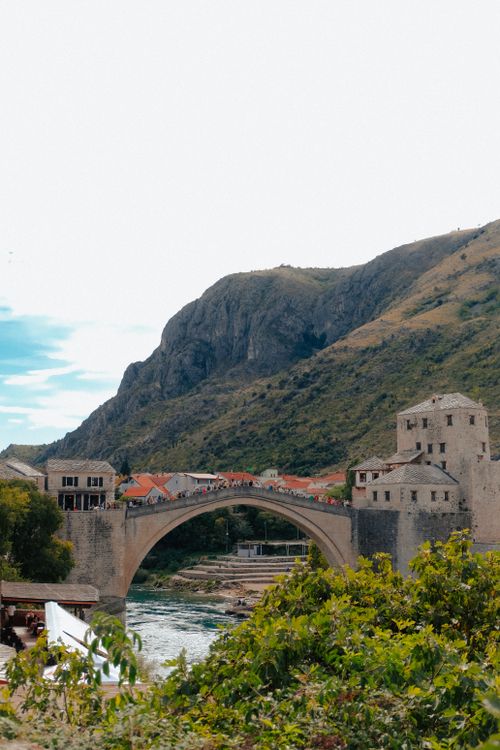
- 12pm — Mostar old town, Stari Most
- 3pm — Return to Sarajevo (late afternoon)
- 7pm — Final dinner, rakija toast
One day in Sarajevo (rushed but possible)
- 8am — Burek breakfast
- 9am — Cable car up Trebević (1 hour)
- 10:30am — Free walking tour (2 hours)
- 12:30pm — Cevapi lunch
- 2pm — Tunnel Museum (1.5 hours including taxi)
- 4pm — Assassination site (30 minutes)
- 5pm — National Library (1 hour)
- 6pm — Sarajevo Roses and Eternal Flame (30 minutes)
- 7pm — Dinner and coffee
Budget Breakdown
Sarajevo is one of the most affordable capitals in Europe. Here's a realistic daily budget:
| Budget | Mid-range | Comfort | |
|---|---|---|---|
| Accommodation/night | Hostel dorm €12–15 | Boutique hotel €50–65 | Hotel Europe / Swissotel €90–120 |
| Food/day | Burek + aščinica + cevapi €8–12 | Mix local + one restaurant €18–25 | Restaurants only €30–40 |
| Transport/day | Tram only €2 | Tram + taxis €6–10 | Taxis + rental car €15–25 |
| Activities/day | Free walks + 1 museum €5–8 | Cable car + 2 museums €18–25 | Guided tours €35–50 |
| Total per day | €27–37 | €96–125 | €170–235 |
3 days in Sarajevo — real budgets
Budget traveler (~€95–110 total): Hostel €13 × 3 nights = €39. Food €10/day × 3 = €30. Cable car €10. Two museum entries €8. Tram for 3 days €6. Free walking tour tip €5. Total: ~€98.
Mid-range traveler (~€280–310 total): Hotel €57 × 3 nights = €171. Food €22/day × 3 = €66. Cable car €10. Three museum entries €15. Taxis €15. Day trip to Mostar €20. Total: ~€297.
Comfort traveler (~€500+ total): Hotel Europe €105 × 3 nights = €315. Restaurants €35/day × 3 = €105. Private guided tours €80. Transport €30. Total: ~€530.
Pro tip: The biggest budget win in Sarajevo is food. Even at mid-range restaurants, you'll pay half of what you'd spend in Prague or Vienna. Spend the savings on an extra museum, the cable car, or a guided war history tour.
What to buy in Sarajevo
Copper coffee sets — From Kazandžiluk (copper street). 20-50 KM (€10-25) depending on size and quality.
Bosnian coffee (ground) — Buy it from a spice shop in Baščaršija. 5-10 KM (€2.50-5) per bag.
Handmade copper pot (džezva) — For making Bosnian coffee at home. 10-20 KM (€5-10).
Rakija — Plum, pear, honey, walnut. 15-30 KM (€7.50-15) per bottle.
Wool socks — Hand-knitted, traditional patterns. 5-10 KM (€2.50-5).
Sarajevo Roses — Replicas of the mortar crater memorial. 10-20 KM (€5-10). The money goes to war victims' charities.
What to skip in Sarajevo
The "Sarajevo Meeting of Cultures" sign — It's a tourist photo op. Fine for a quick picture but it's not a real attraction.
Most souvenirs in the main bazaar — Overpriced. Walk 2 streets away from the Sebilj and prices drop.
The restaurant with the best view of the Sebilj — Tourist trap. Overpriced bad food. Walk 5 minutes to Dveri or Nanina Kuhinja.
FAQ
Frequently Asked Questions
Yes. Absolutely. The war ended in 1996. There is no active conflict. Sarajevo is safer than many Western European cities. The biggest risks are pickpocketing in Baščaršija and aggressive drivers. The war museums can be emotionally heavy, but physically, you're safe.
Three days is perfect. Two days for the city (old town, Trebević, war museums, food). One day for a day trip to Mostar or Konjic. You can see the highlights in one long day but you'll miss a lot.
May, June, and September. Perfect weather (20-25°C), the cable car is running, the mountains are green. July and August are hotter but still fine. Winter is cold and gray but the mountains are beautiful for skiing.
Most EU, US, UK, Canadian, Australian, and New Zealand passport holders get 90 days visa-free. Check official sources for your nationality.
Ćevapi (grilled meat sausages), burek (meat pastry), Bosnian coffee, kaymak (creamy dairy spread), baklava, and rakija (fruit brandy). Don't skip any of them.
No. It's one of the cheapest capitals in Europe. Budget €40-50 per day for mid-range travel (hotel, food, attractions, transport). Budget €25-30 for budget travel (hostel, street food, walking).
Train is best — 2.5 hours, 13-15 KM (€6.50-7.50), spectacular canyon scenery. Bus is cheaper but less scenic — 2 hours, 10-12 KM (€5-6). Multiple options daily for both.
Final thought — and a warning
I've been to a lot of European capitals. Vienna is beautiful. Budapest is grand. Prague is a fairy tale. Sarajevo is none of those things.
Sarajevo is bullet holes in buildings. It's a mortar crater in the pavement where 68 people died, next to a vegetable stand where someone is buying onions. It's the Tunnel of Hope — an 800-meter hole dug by hand, in secret, so a city could eat.
But Sarajevo is also the sound of copper hammers on Kazandžiluk. It's the call to prayer from the Gazi Husrev-beg mosque, then church bells from the cathedral five minutes later. It's a plate of cevapi that costs €2.50 and tastes like a million. It's a Bosnian coffee that takes 30 minutes to drink, and no one is in a hurry.
Most tourists come to Bosnia for Mostar. They see the bridge, take the photo, leave. They never get to Sarajevo. That's their loss.
Sarajevo is not a city you visit. It's a city you feel. And once it gets into you, it never leaves.
One last thing: The Tunnel of Museum will make you cry. The War Childhood Museum will make you cry harder. That's fine. Bring tissues. Let it happen. You're supposed to feel something here.
Related articles: Mostar Travel Guide | Konjic Travel Guide | Jahorina Travel Guide | Trebinje Travel Guide
Hotels & Accommodation
Where to Stay in bosnia-and-herzegovina
Compare hotels, apartments, and guesthouses. Prices update in real time.
We earn a small commission when you book through these links — at no extra cost to you.
Travel Insurance
Don't Travel Without Insurance to bosnia-and-herzegovina
World Nomads covers 150+ activities, medical emergencies, trip cancellation, and gear theft. 60-day cookie — get a free quote before you book flights.
Get a Free Quote →Affiliate link — we earn a commission (10–15%) at no extra cost to you.
Stay Connected Abroad
Skip Roaming Fees in bosnia-and-herzegovina
Airalo eSIMs work in 190+ countries. Buy before you fly, activate on arrival. No physical SIM needed — just scan a QR code.
Get an eSIM →Affiliate link — we earn 10% commission at no extra cost to you.